The JD Twitch Collection
A vinyl identification and grading system that helped World of Echo process 20,000 records from the collection of Keith McIvor aka JD Twitch.
 1 / 6
- Role
- Conceived, built and deployed the system, then trained the team
- Where
- Cheshire Street, Brick Lane, London
- When
- 2026
The brief
create a system to process 20,000 records ready to get them out into the hands of collectors
20,000
records in the collection
3
technicians
1
system
2
weeks to build
Who it was for
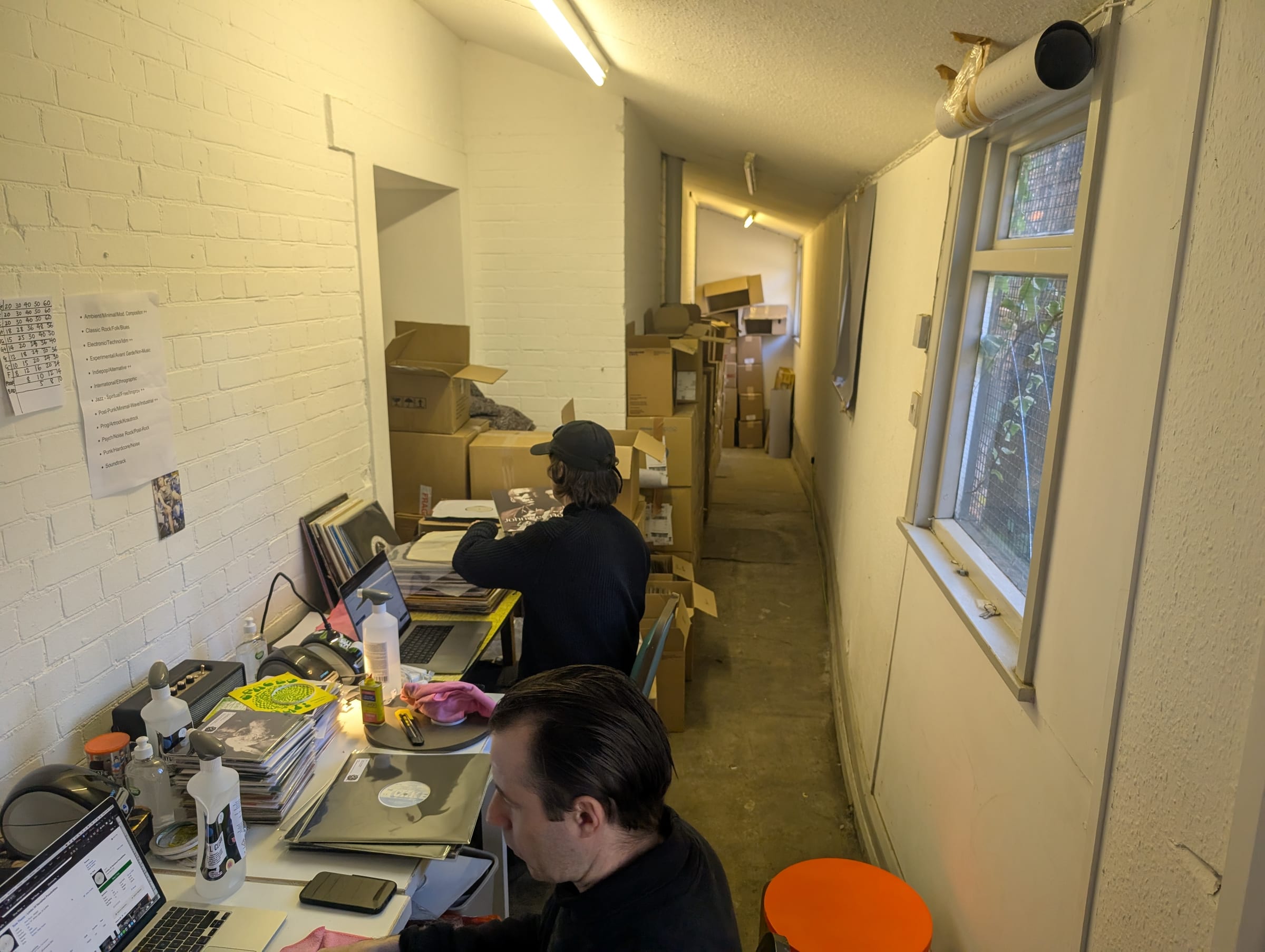
Three technicians in the shop, each grading at their own station with a phone and a laptop, and the expertise to make the final call.
What it had to do
- Identify the exact pressing, not just the record
- Grade on sight, straight into the system
- Suggest a price, but leave the final call to the technician
- Print a sticker that matches the labels already in the shop
The hard part
Telling pressings apart. The same record can exist in many versions, so the system had to use the vinyl colour, the catalogue number and the label to find the right one.
Made for
Made for: Mobile, Website, Physical hardware
World of Echo, on Cheshire Street off Brick Lane, bought one of the largest record collections ever to change hands: 20,000 records belonging to the late JD Twitch, one half of Optimo. Instead of sitting in an archive, the records were going back out, to find their way to other collectors in the scene.
Every record had to be identified, graded, priced, cleaned and labelled. With a series of separate tools, it would have been a struggle to get things ready in time. I designed one system to do the lot, built it in about two weeks, deployed it in the shop and trained the technicians to use it.
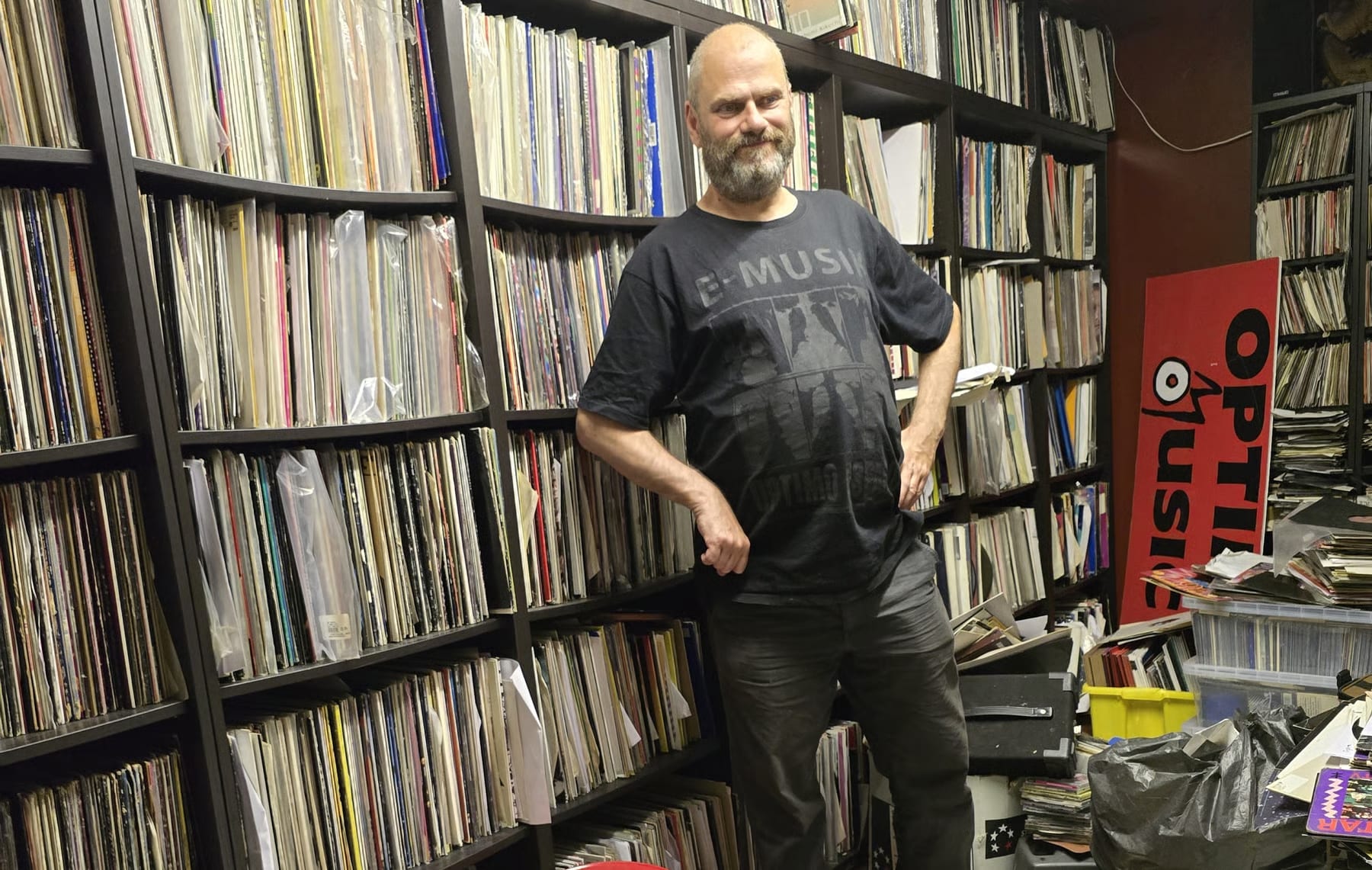
JD Twitch. Photo: Marissa Costello
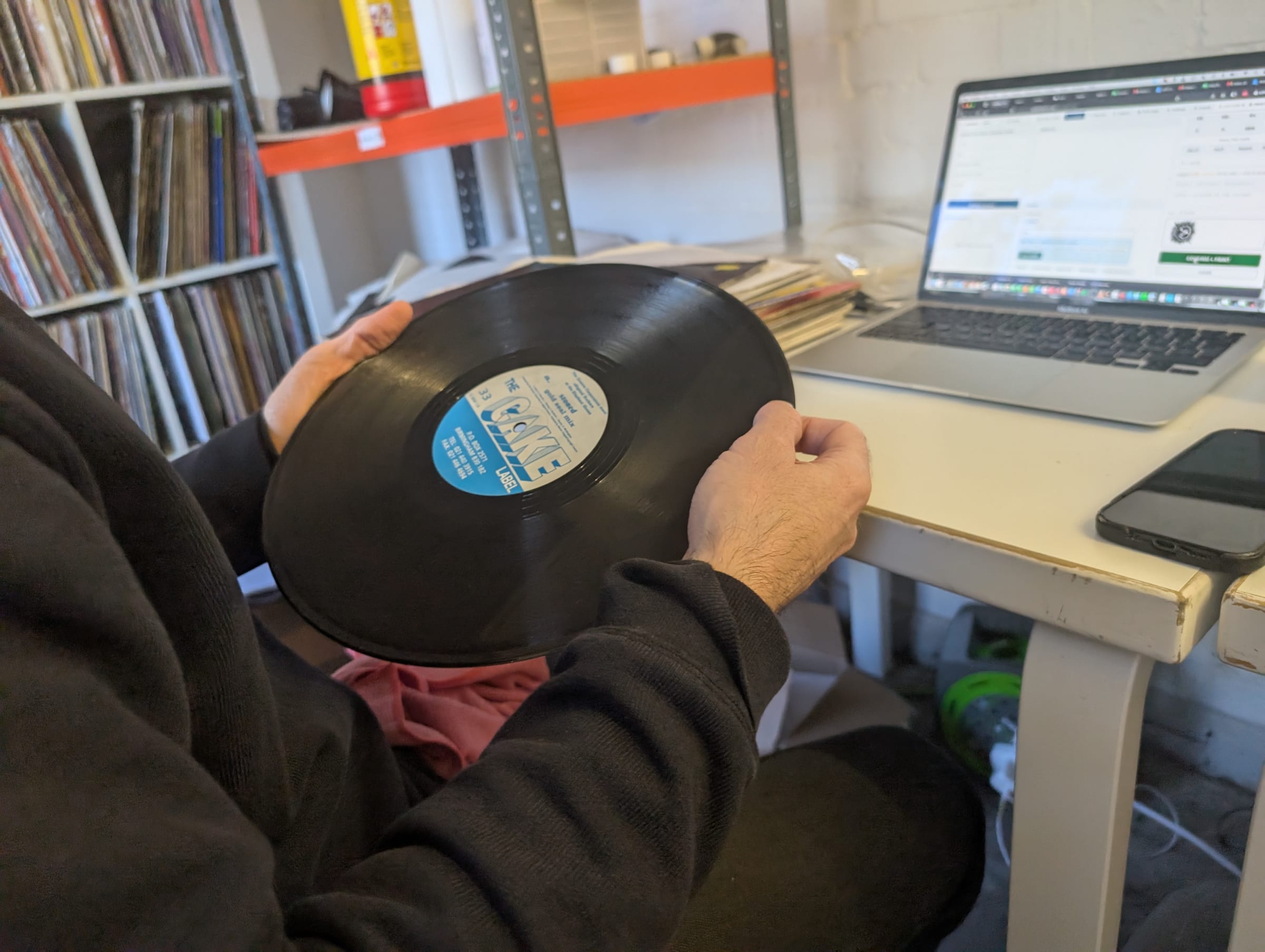
Checking the label
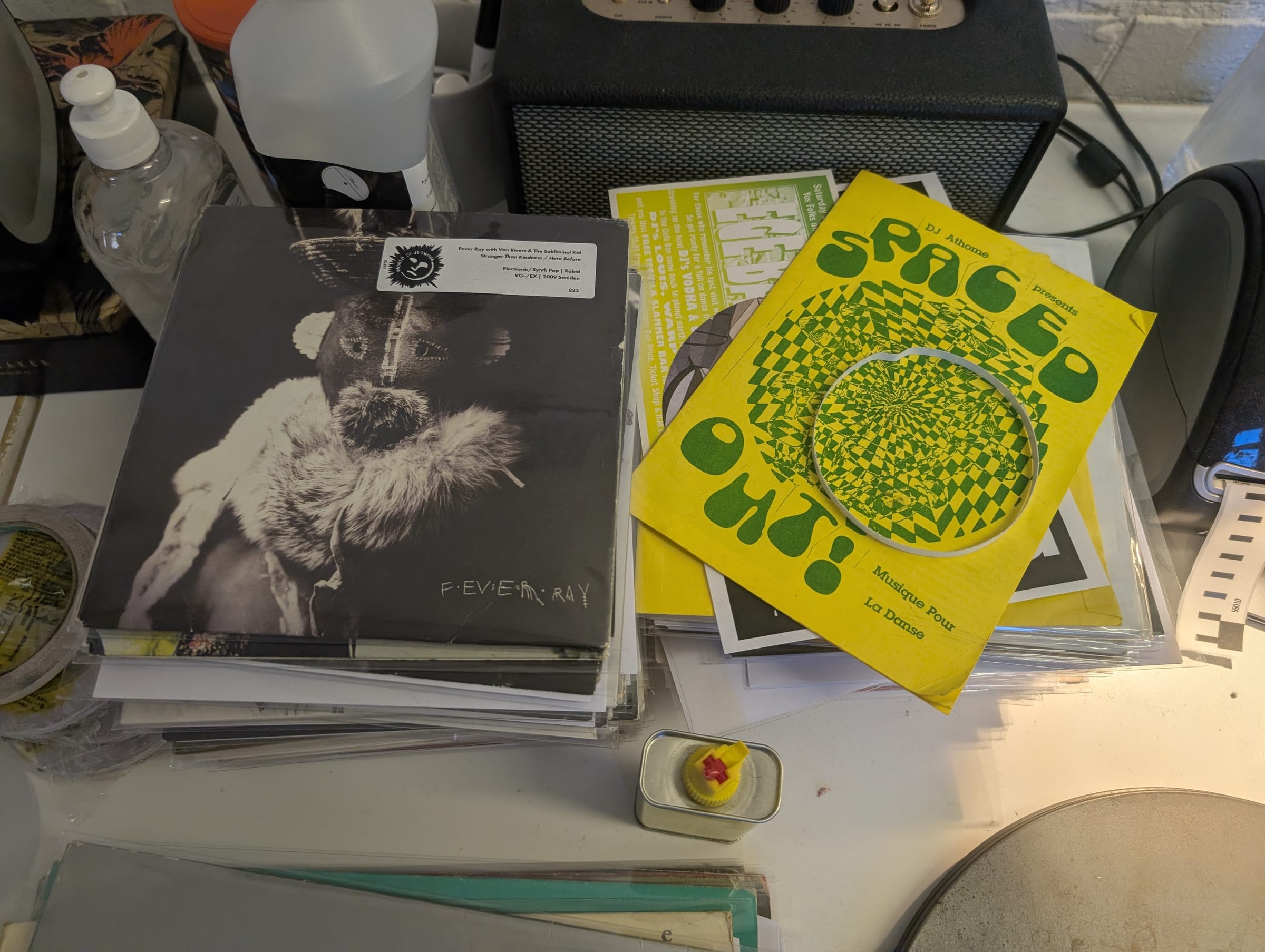
The pile at a station
How a record goes through
-
Photograph. The phone connects to the laptop as its camera. The technician photographs the cover and label, and the photos upload automatically.
-
Identify. Computer vision and OCR read the images and match them against the Discogs data dumps and API, down to the pressing.
-
Grade. The technician grades the record on sight, in the interface.
-
Price. The system compares Discogs with other sources and suggests a price. It's a guide: the technician always sets the final price.
-
Label. The record is cleaned and a Dymo LabelWriter prints a sticker in the shop's format, with its logo, the title, artist, genre, label and price, matching the labels already in store.
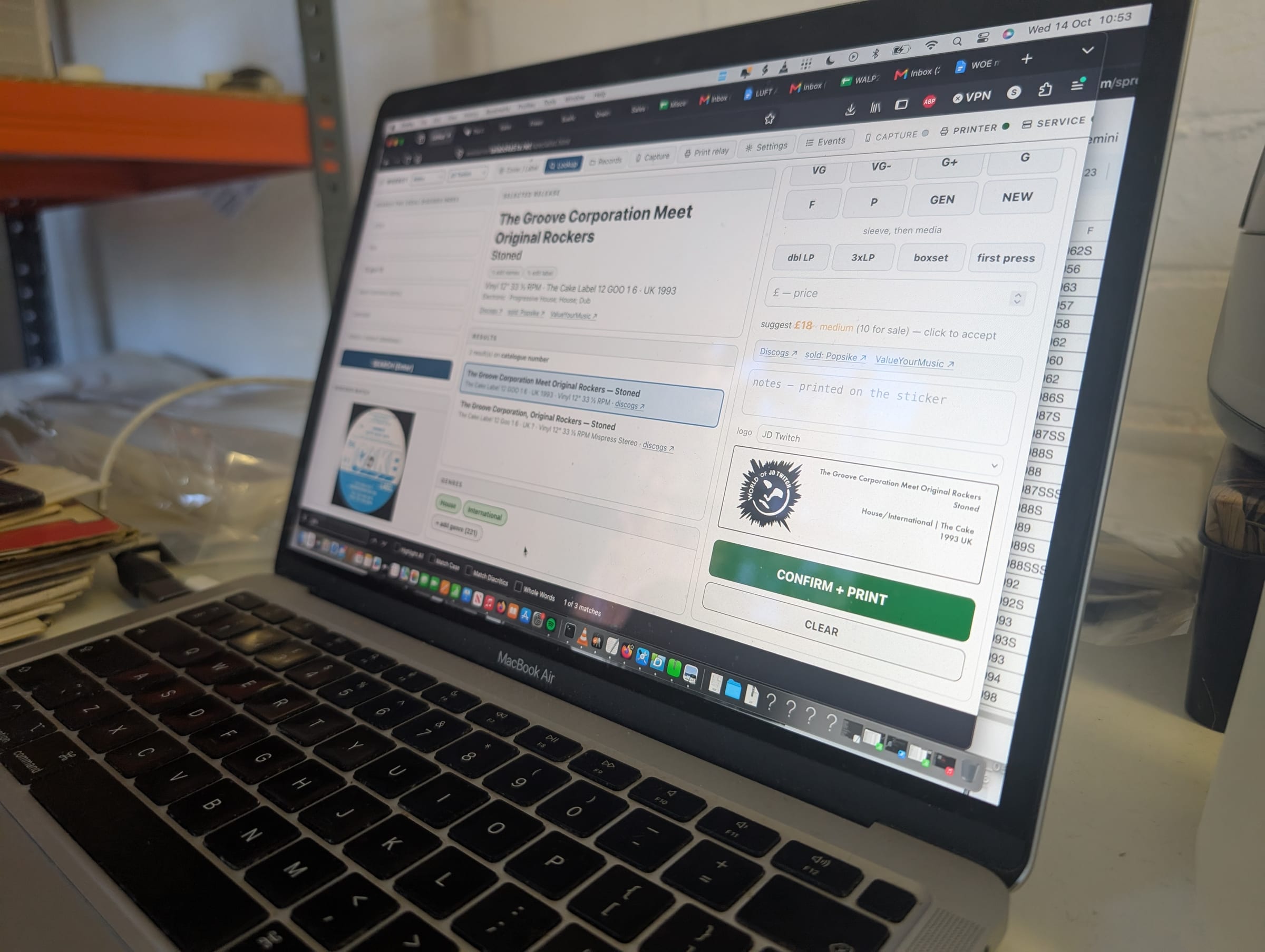
Release found and priced: confirm and print
Signal flow
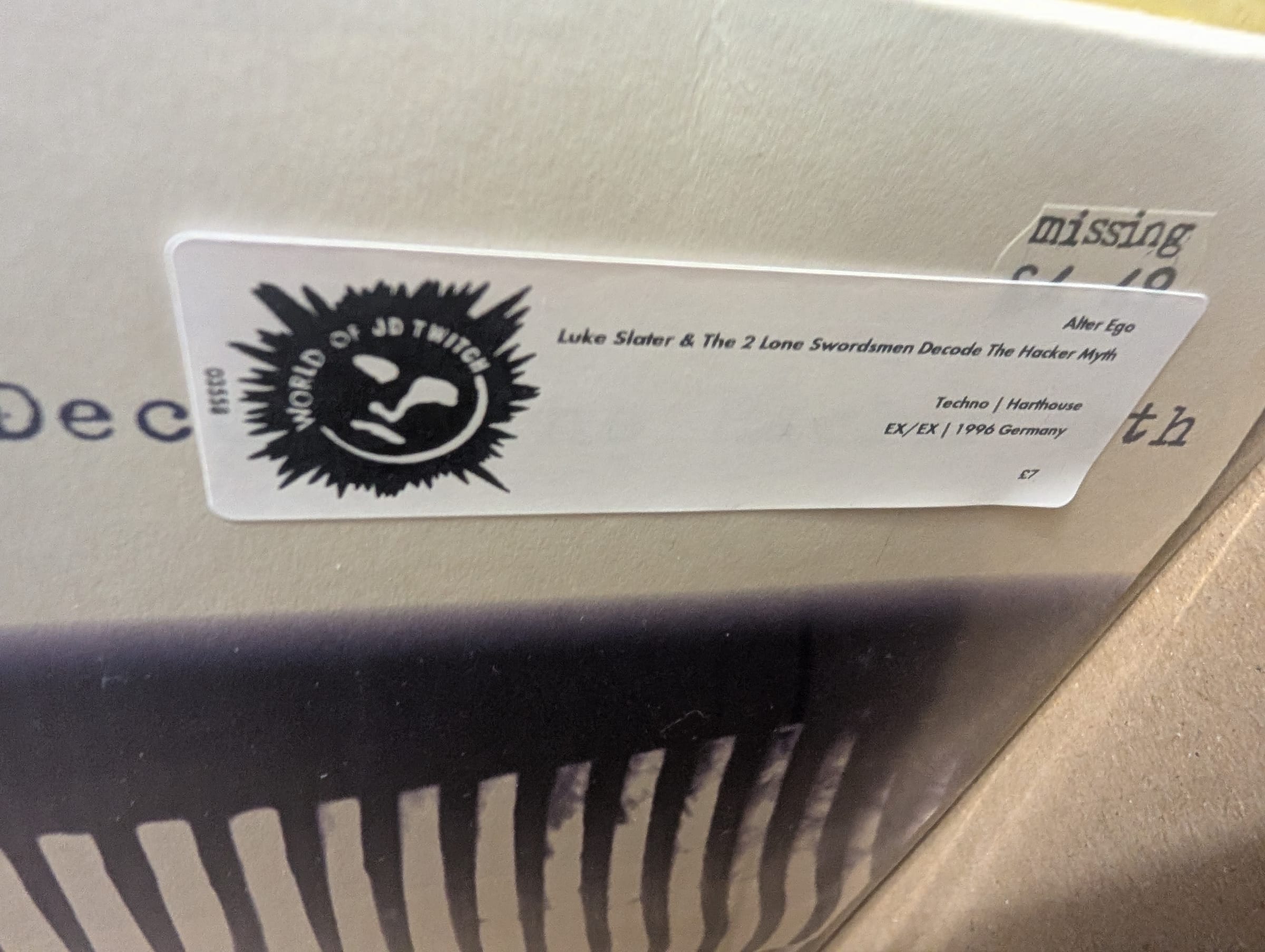
The finished sticker, in the shop's format
Tech stack
Software
Hardware

World of Echo's poster for part one
How it went
By the first drop on 14 November, 8,000 records will have been processed in a matter of weeks, a job that wasn't possible with a series of disparate systems. The shop called the system a vital part of hitting their targets.